
Courses
Bachelor of Science in Respiratory Technology (B.Sc. Respiratory Technology)
Course Description
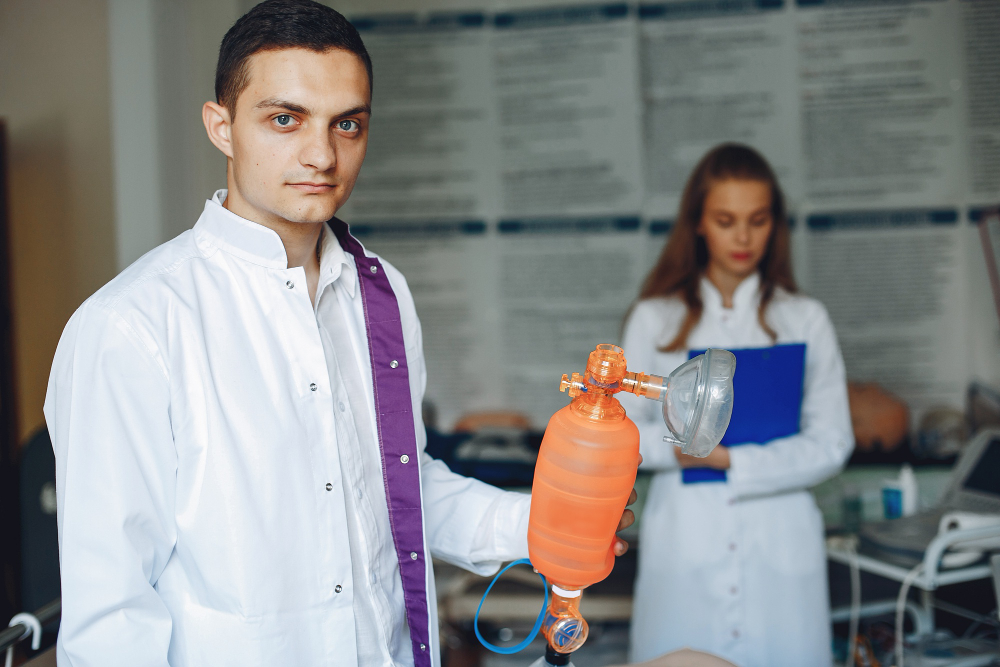
Bachelor of Science in Respiratory Technology is a four-year programme that trains students to support patients with breathing disorders, critical illness, and cardiopulmonary conditions. The curriculum includes anatomy, physiology, respiratory pathophysiology, pulmonary function testing, mechanical ventilation, oxygen therapy, airway management, arterial blood-gas analysis, sleep studies, non-invasive ventilation, emergency respiratory care, infection control, and patient monitoring. Students learn to assist intensivists, pulmonologists, anaesthesiologists, and emergency teams in managing patients with respiratory failure.
Internships
Students complete clinical postings in ICUs, NICUs, emergency departments, pulmonary-function laboratories, sleep laboratories, operation theatres, and home-care services. Internship learning includes ventilator setup, oxygen therapy, airway suctioning, nebulisation, arterial blood-gas sampling support, pulmonary-function testing, sleep-study assistance, and infection-control practices. Training is provided in multi-speciality hospitals, critical-care units, and respiratory medicine departments.
Jobs / Scope in Government & Law Enforcement
Graduates can apply for respiratory technologist, ICU technician, pulmonary-function technician, and critical-care technician posts in government hospitals, medical colleges, ESIC hospitals, Railways, defence medical services, and state health departments. They may support disaster-response teams, epidemic preparedness programmes, and emergency medical services during respiratory outbreaks. Public-sector ICUs, trauma centres, and pulmonary medicine departments require trained respiratory-care professionals.
Jobs / Scope in Healthcare & Hospitals
Graduates work as respiratory therapists, respiratory technologists, ICU technologists, ventilator technicians, pulmonary-function technologists, sleep-lab technologists, and home-care respiratory specialists. Employers include hospitals, ICUs, NICUs, pulmonary clinics, sleep centres, emergency departments, home-healthcare providers, and medical-device companies.
Career Prospects
Career growth includes senior respiratory technologist, ICU supervisor, sleep-lab manager, clinical educator, medical-device specialist, and critical-care coordinator. Higher study options include M.Sc. Respiratory Technology, critical-care technology, and healthcare management. Demand is strong due to respiratory diseases, critical-care expansion, post-COVID care needs, and growing intensive-care infrastructure.

Eligibility
- Pass in 10+2 / Intermediate with Physics, Chemistry, Biology, and English.
- Minimum aggregate marks as prescribed by the university and regulatory authority.
- Medical fitness may be required for clinical training.
- Admission is generally merit-based or through the university’s admission process.